

Understanding your Medicare coverage options and how to choose the right fit for your healthcare needs.
When it comes to Medicare, one of the most common questions we hear is: What's the difference between Medicare Advantage and Medicare Supplement insurance?
Both options can help you manage healthcare expenses, but they work in very different ways.
Whether you're enrolling in Medicare for the first time or reviewing your coverage for 2027, understanding these differences can help you make a more informed decision.
Let's break it down.
What Is Medicare Advantage?
Medicare Advantage, also known as Medicare Part C, is an alternative way to receive your Medicare benefits through a private insurance company approved by Medicare.
These plans combine your Medicare Part A (hospital insurance) and Part B (medical insurance) benefits into one plan. Most also include Part D prescription drug coverage.
Many Medicare Advantage plans offer additional benefits that Original Medicare doesn't typically cover, such as:
Routine dental services
Vision exams and eyewear allowances
Hearing services
Fitness and wellness benefits
Other supplemental benefits, depending on the plan
Some Medicare Advantage plans have $0 monthly premiums, although you generally must continue paying your Medicare Part B premium.
One important consideration: Medicare Advantage plans often have provider networks, copayments, and other cost-sharing requirements. Your coverage and costs can vary depending on the plan you choose.
What Is Medicare Supplement Insurance?
Medicare Supplement insurance, also called Medigap, works alongside Original Medicare to help cover certain out-of-pocket healthcare expenses.
With Original Medicare, you're generally responsible for deductibles, coinsurance, and other costs. A Medicare Supplement policy helps pay some of those expenses, depending on the plan you select.
Medicare Supplement plans are standardized and identified by letters, such as Plan G or Plan N.
Some of the benefits of Medicare Supplement coverage include:
The flexibility to visit any doctor or hospital in the United States that accepts Medicare
Help covering certain out-of-pocket expenses associated with Original Medicare
More predictable medical expenses, depending on your plan
Coverage that isn't restricted to a local provider network
Unlike most Medicare Advantage plans, Medicare Supplement policies generally do not include prescription drug coverage. You may need to enroll in a separate Part D plan.
Medicare Supplement policies also typically have an additional monthly premium, on top of your Medicare Part B premium.
Medicare Advantage vs. Medicare Supplement: A Side-by-Side Comparison
Here's a simple look at how these two options compare.
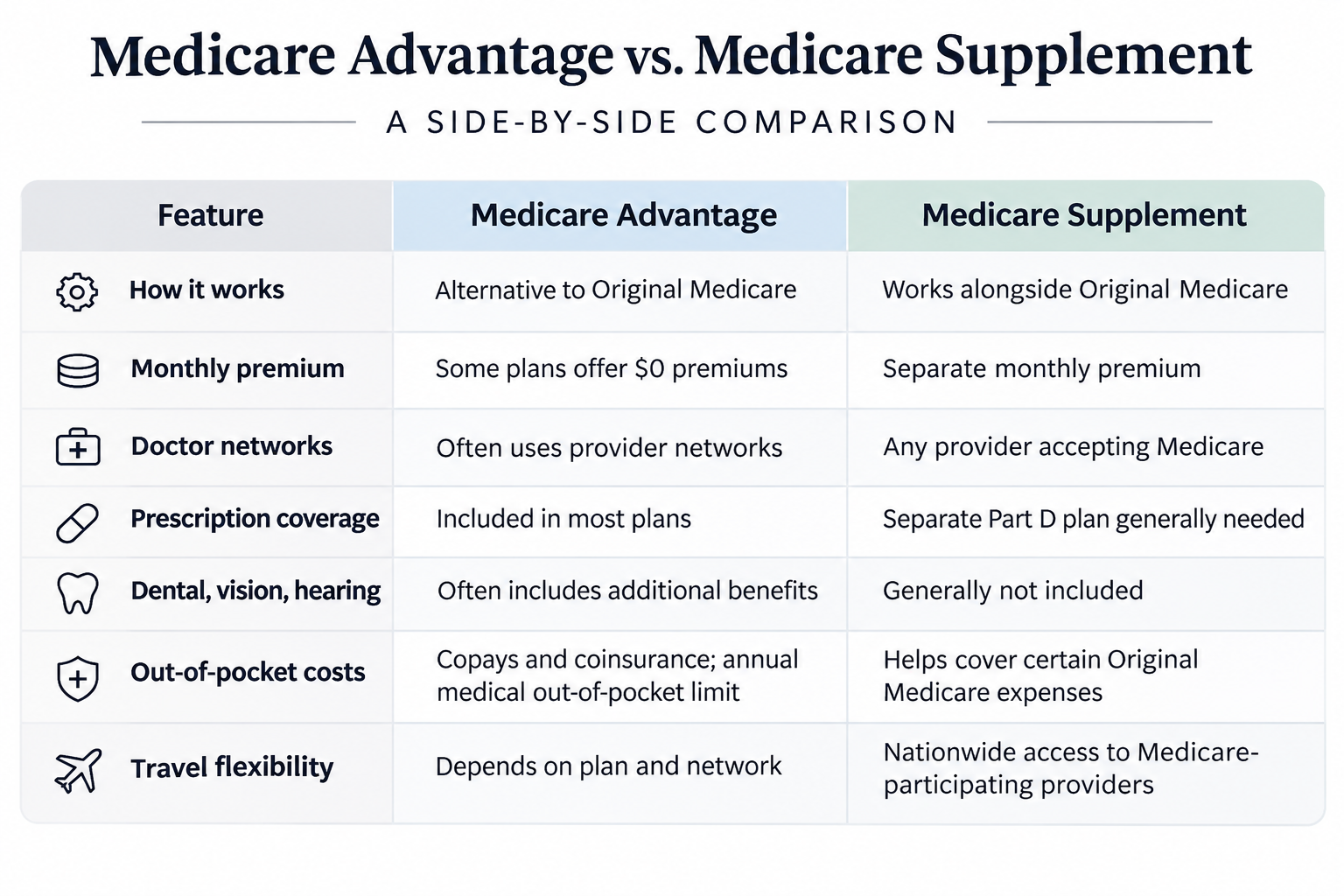
Both options require you to maintain Medicare Part B, including paying your applicable Part B premium.
Which Option Costs Less?
This is where comparing Medicare coverage becomes especially important.
Medicare Advantage plans may have lower monthly premiums, but you'll typically pay copayments or coinsurance when receiving certain healthcare services.
Medicare Supplement plans generally have higher monthly premiums, but they can help reduce what you pay when you receive Medicare-covered services.
For example, someone who visits doctors frequently or requires ongoing specialist care may appreciate the more predictable cost-sharing offered by certain Medicare Supplement plans.
Someone who prefers a lower monthly plan premium and is comfortable using a provider network may find Medicare Advantage appealing.
The lowest monthly premium doesn't always mean the lowest overall healthcare cost.
It's important to consider your premiums, prescriptions, medical needs, and potential out-of-pocket expenses together.
What About Your Doctors and Hospitals?
One of the biggest differences between Medicare Advantage and Medicare Supplement coverage is how you access healthcare providers.
With Medicare Advantage, your plan may have a network of doctors, specialists, and hospitals. Depending on whether you have an HMO or PPO plan, receiving care outside that network may be limited or cost more.
With Original Medicare and a Medicare Supplement policy, you can generally visit any healthcare provider nationwide who accepts Medicare.
For Michigan residents who travel frequently, spend winters in another state, or see specialists outside their local area, this can be an important consideration.
Can You Switch Between Medicare Advantage and Medicare Supplement?
Yes, but there are important rules to understand.
Medicare Advantage plans can generally be changed during designated enrollment periods, including the Annual Enrollment Period from October 15 through December 7.
Medicare Supplement coverage works differently.
When you first become eligible for Medicare, you generally have a six-month Medigap Open Enrollment Period beginning when you're 65 or older and enrolled in Medicare Part B.
During this period, you have important protections when purchasing Medicare Supplement coverage.
Outside certain enrollment periods or guaranteed-issue situations, insurance companies may use medical underwriting to determine eligibility or pricing.
This means switching from Medicare Advantage to Medicare Supplement later may not always be as simple as changing plans.
You also cannot use a Medicare Supplement policy together with Medicare Advantage coverage.
Before making a change, it's important to understand your eligibility, enrollment rights, and available options.
Which Medicare Option Is Right for You?
There isn't one Medicare plan that's best for everyone.
The right coverage depends on your individual healthcare needs, financial situation, and personal preferences.
When comparing your options, consider asking yourself:
Do I prefer lower monthly premiums or more predictable medical expenses?
Are my preferred doctors and hospitals included?
How often do I visit specialists or receive medical care?
Do I travel frequently or spend part of the year outside Michigan?
What prescription medications do I take?
How important are additional benefits such as dental, vision, and hearing?
Am I eligible to purchase Medicare Supplement coverage?
Taking time to answer these questions can help you narrow down which type of coverage may work best for you.
Understanding Your Medicare Options Doesn't Have to Be Complicated
At Platinum Benefit Advisors, we believe choosing Medicare coverage should begin with understanding your options, not feeling pressured into a particular plan.
Our team of licensed independent insurance agents helps Michigan residents compare Medicare Advantage, Medicare Supplement, and prescription drug coverage based on their individual needs.
Whether you're new to Medicare, considering a change, or simply want a second look at your current coverage, we're here to help you make an informed decision.
Have questions about Medicare Advantage or Medicare Supplement coverage?
Contact Platinum Benefit Advisors today. Our team would be happy to help you explore your options and find coverage that fits your needs.
For more information about Medicare changes for the upcoming year, explore our 2027 Michigan Medicare Guide.